 Francois Guay
1 min read
The Measurement Crisis Behind Cyber Awareness
 Francois Guay : May 1, 2026, 6:43:48 AM
Originally published in the
Originally published in the 
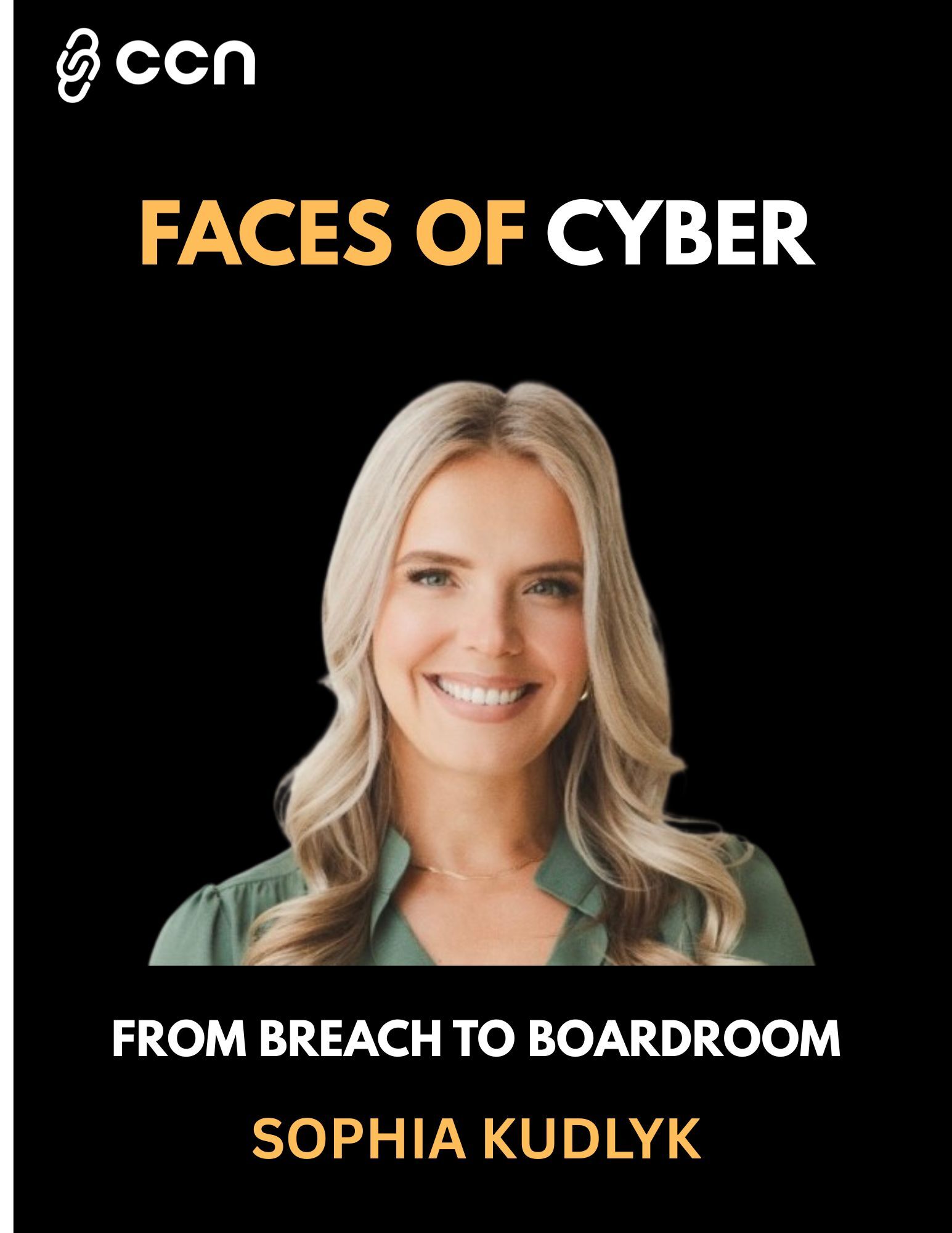
In a market defined by volatility, innovation, and rising claims, Sophia Kudlyk, Cyber Practice Leader at Hub International, stands out for her ability to translate the language of cyber risk into business strategy. Her career story is as multidimensional as the industry she helps navigate, spanning insurance brokering, incident response, Insurtech, and executive advisory. The through-line, as she describes it, is simple but rare: bridging two worlds; the technical complexities of cyber threats and the strategic realities of corporate leadership.
A Non-Linear Career Built on Curiosity and Courage
Kudlyk’s professional journey reads more like a roadmap for adaptability than a straight line. She began in the insurance sector more than a decade ago, addressing boards on financial exposures and quickly realizing that the next frontier of risk lay in data and technology. “I saw an opportunity to bridge leadership and management with the world of cyber risk,” she recalls. That instinct would guide every subsequent pivot.
Her next chapter was a bold one: leaving the familiarity of insurance to lead the Canadian practice of an incident response firm. The timing, during the COVID-19 pandemic, was pivotal. With businesses shifting online overnight, attacks surged. Kudlyk’s team was thrust into real-time crisis management for ransomware and data-breach events. The experience, she says, built a lasting sense of empathy. “These are high-pressure, high-sensitivity situations. The human factor is just as critical as the technical one.”
Later, she moved into the Insurtech world, joining Coalition to help shape messaging between product developers, underwriters, and clients. Immersed in Silicon Valley’s brand and communications culture, she learned how to simplify the complex, to tell the story of cyber risk in clear, actionable terms. Now, back at Hub International as Cyber Practice Leader, Kudlyk integrates those perspectives to help Canadian organizations build cyber resilience through better policy design, risk education, and executive alignment. “Every pivot,” she says, “has made me more effective in advising clients. It’s all connected.”
Mentorship, Mindset, and the Power of Fear
For Kudlyk, growth is not about titles but mindset. She credits much of her success to mentors who recognized potential before she did. When first invited into the forensics and incident-response world, despite not having a technical background, she hesitated. A mentor convinced her otherwise: ‘We need someone who can bridge these two worlds.’ That encouragement reshaped her career. She also embraces what she calls “using fear as a compass.” “Fear tells you where the growth opportunities are. If something scares you, it’s probably the direction you should go.”
That philosophy, she says, applies not only to individuals but to the entire cyber insurance industry, which faces its own existential test: evolving fast enough to stay relevant amid constant digital disruption.
Inside the Cyber Insurance Paradox
According to Kudlyk, today’s cyber insurance market is both one of the most innovative and most unstable segments in commercial insurance. On one hand, insurers have made extraordinary progress. Over the past five years, cyber policy language has expanded dramatically, offering broader coverage and more resources for clients. “There’s been a tremendous amount of innovation,” she says. “Policies now address everything from ransomware response to business-interruption costs and system restoration.” But that progress comes with volatility. The same innovation attracting insurers to enter the market has also brought a flood of new capacity and competition. Too many players, she warns, jumped in too quickly, without the underwriting maturity needed for such a dynamic risk class.
“Cyber risk isn’t slowing down. The frequency of claims, especially ransomware and social engineering, has been relentless. For some carriers, it’s tanking their capacity.”
As a result, pricing, coverage limits, and terms fluctuate unpredictably. What looks like a buyer’s market one year can harden the next. Kudlyk calls it a “short-lived benefit” for clients.
From Reaction to Sustainability
Kudlyk believes the industry must shift from reactionary pricing cycles to long-term sustainability. That requires stronger partnerships between carriers and brokers, built on transparency, data, and shared objectives rather than short-term premium competition.
“The conversation must move beyond year-over-year price. Carriers need to take a high-level, strategic approach to create sustainable programs,” she explains. “That’s how we make this market resilient.” For brokers, that means taking on the role of translator and educator, helping clients understand not only what their policy covers but why certain fluctuations happen. It also means contextualizing risk beyond insurance, linking it to governance, training, and cyber hygiene.
“Brokers have to illustrate the threat landscape in a way that empowers leadership teams, not overwhelms them,” Kudlyk says. “Our job is to prepare organizations to make informed decisions, not to sell fear.”
The Human Web Behind Every Incident
Few industries rely more on collaboration than cyber insurance. Behind every claim is what Kudlyk calls “a web of contributors”, breach coaches, digital-forensics experts, negotiators, PR specialists, and restoration teams. Coordinating that network requires both technical understanding and emotional intelligence. “You’re dealing with organizations under immense pressure. The ability to empathize, communicate clearly, and align everyone toward recovery is essential.”
To stay current, Kudlyk remains deeply embedded in this ecosystem, following vendor threat reports, attending conferences, and maintaining relationships with incident-response professionals who see the front lines daily. “We’re only as good as the stories we can convey and the data that backs them,” she says. This storytelling mindset, combining empathy with evidence, is what keeps her advisory work grounded in real-world impact rather than theory.
Advice for the Next Generation
For those entering the cyber or insurance fields, Kudlyk’s guidance is refreshingly practical.
A Human Lens on a Technical World
What distinguishes Sophia Kudlyk isn’t only her professional range but her conviction that cyber risk is as much about people as it is about systems. The best policies, she argues, are those that integrate human behavior, leadership awareness, employee training, and cultural resilience, into the equation. That holistic view is precisely what the industry needs as it matures. For organizations facing rising ransomware threats and regulatory scrutiny, brokers like Kudlyk are not just intermediaries, they are interpreters of risk, bridging the language of cybersecurity with the language of business strategy. “The threats aren’t slowing down,” she says. “But our ability to learn, adapt, and collaborate is what will define the next chapter.”
You can reach Sophia here.
.jpg)
1 min read
Francois Guay : May 1, 2026, 6:43:48 AM
Originally published in the
1 min read
Francois Guay : Mar 6, 2026, 2:46:08 PM
Originally published in the
1 min read
Francois Guay : Jan 8, 2026, 10:34:07 AM
Originally published in the