3 min read

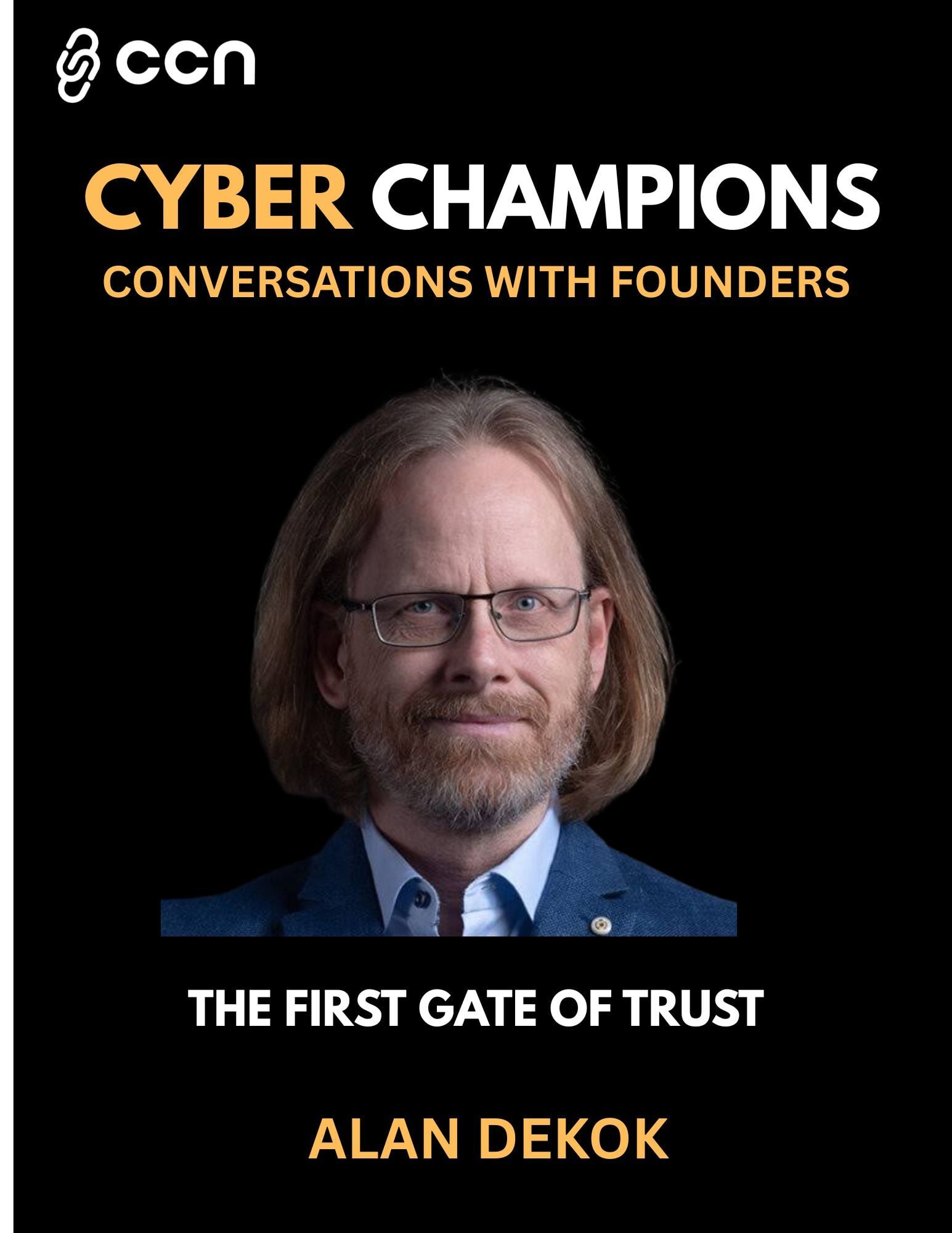
The First Gate of Trust

The First Gate of Trust

Originally published in the download-Nov-23-2025-02-23-56-6249-PMhttps://financialpost.com/technology/tech-news/from-finance-to-the-frontlines-of-cybersecurityhttps://financialpost.com/technology/tech-news/keeping-the-lights-on-canadas-ot-cybersecurity-wake-up-callhttps://financialpost.com/technology/tech-news/opinion-the-power-of-the-channel  

How Alan DeKok and Inkbridge Networks quietly power the infrastructure that decides who gets on the network at all

For most executives network access control is invisible until it fails. Yet every digital transaction, cloud workload and remote login depends on a decision made before any application or identity platform comes into play. Someone or something must decide whether a device is allowed onto the network at all. That decision is often governed by RADIUS, a protocol created more than three decades ago and still quietly powering global connectivity.

Alan DeKok has spent his career inside that invisible layer. As CEO of Inkbridge and one of the central figures behind the FreeRADIUS project DeKok sits at a rare intersection of foundational internet infrastructure. open-source software and enterprise scale operations. His work is not about chasing the next security trend. It is about making sure the first gate of digital access works reliably at massive scale.

RADIUS remains one of the most misunderstood yet essential components of modern networks. It controls the initial network connection itself validating whether a device can connect before traffic is allowed to flow. This is fundamentally different from identity and access management systems which govern what users can access once they are already online. RADIUS answers a more basic and more consequential question. Are you allowed on the network at all?

Despite its age RADIUS has never been displaced. Hardware manufacturers standardized on it early and never left. Enterprise switches, wireless access points and consumer grade networking equipment all support it. Large roaming networks such as those used by universities and mobile providers rely on it, to authenticate hundreds of millions of users daily. Newer protocols promised replacement, but simplicity and embedded hardware support kept RADIUS firmly in place.

FreeRADIUS emerged in the late 1990s when existing implementations stagnated. DeKok and others saw a gap between the importance of the protocol and the quality of the available software. Development was slow, patches were hard to land and innovation lagged real world needs. FreeRADIUS took a different approach. Contributions were welcomed, improvements moved quickly and the project evolved alongside the networks it served. Within a few years it became the dominant RADIUS implementation worldwide.

That success created a different problem. Large organizations do not run critical authentication infrastructure on community goodwill alone. They require commercial support, operational guarantees and accountability when something breaks at scale. Inkbridge was built to bridge that gap. Originally known as Network RADIUS the company rebranded to reflect a broader mandate and to clearly separate the open source project from the commercial services that support it.

Today Inkbridge supports RADIUS deployments for national ISPs, financial institutions and Fortune scale enterprises. In these environments failure is not an inconvenience. It is a business stopping event. Network access control sits at the point where security resilience and operational continuity collide. That makes it strategic infrastructure not commodity software.

DeKok is pragmatic about emerging technologies, particularly artificial intelligence. AI has value but not where marketing hype suggests. It can accelerate pattern recognition and help identify anomalies in massive log datasets. It can assist with programming and content generation. But it does not replace the logic of authentication protocols. Network access remains a binary decision and the cost of being wrong is high.

There is also risk in over reliance on AI generated security insights. DeKok has seen vulnerability reports generated without true understanding of the underlying software. Correlation is mistaken for causation and noise overwhelms signal. In environments where authentication governs access to entire networks, human verification remains non-negotiable.

The threat landscape reflects this reality. Attackers increasingly bypass hardened authentication systems by targeting endpoints and people. Cached credentials, roaming devices and social engineering amplified by AI, provide easier paths. Cyber resilience will not come from exotic technology alone. It comes from disciplined controls, behavioural baselines, location intelligence, and human intervention when activity deviates from the norm. AI can help identify risk, but it cannot be left to decide on its own.

For DeKok the broader lesson extends beyond technology into talent and leadership. Technical success depends less on static knowledge and more on learning methodology, communication and focus. The professionals who advance are those who ask questions early, explain their impact clearly and build networks of trust. The same principles apply to companies. Visibility clarity and operational discipline outperform complexity.

Inkbridge and FreeRADIUS illustrate a deeper truth about the digital economy. Some of the most critical systems are not new. They endure because they work because they are embedded and because they sit at control points that cannot afford failure. Innovation in these spaces is evolutionary not revolutionary and leadership is measured in uptime not headlines.

As Canada and other digital economies invest in AI, cloud and advanced identity systems, the lesson is clear. Do not neglect the foundations. Trust is built at the first point of access and few people understand that better than Alan DeKok. In cybersecurity and connectivity the quiet systems often matter most.

You can reach Alain on Linkedin.

Redefining cybersecurity: data, resilience, and the future of MDR

1 min read

Redefining cybersecurity: data, resilience, and the future of MDR

Originally published in the In this Cyber Champions article we talk to JP Haynes, CEO of eSentire a company that has grown from an early managed...

Read More
Basement to Boardroom: How F12 Became a Cyber Powerhouse

2 min read

Basement to Boardroom: How F12 Became a Cyber Powerhouse

Originally published in the From a humble basement operation to a national leader in IT and cybersecurity services, F12’s story...

Read More